A Practical Guide to Buying Second-Hand Fitness Equipment
Buying second-hand fitness equipment can turn a tight budget into a realistic home-gym plan without forcing you to settle for flimsy gear. In a market crowded with glossy launches and fast-moving trends, used machines often offer sturdier frames, better components, and more value for the money. The challenge is knowing what to inspect, what to avoid, and when a bargain is only pretending to be one. This guide maps the process clearly, so you can shop with confidence instead of guesswork.
The Appeal of Used Equipment and an Outline for Smarter Shopping
Second-hand fitness equipment sits at the intersection of practicality, value, and a little bit of detective work. For many buyers, the appeal begins with price. A treadmill that once sold for the cost of a short vacation may appear on a local marketplace for a fraction of that amount after a move, a renovation, or a sudden loss of enthusiasm. Strength gear can be even more attractive. A used barbell, squat stand, or set of bumper plates often performs almost exactly as intended years after purchase, provided it has been treated reasonably well. In other words, the shiny box may fade, but steel tends to remain steel.
The market matters because fitness equipment is one of the most common categories of lightly used household goods. People buy with great ambition in January, discover that an unused elliptical makes a very expensive clothes rack by April, and list it in June. That cycle creates opportunity for buyers who are patient and informed. It also creates traps. Some machines are neglected, some are incomplete, and some were not very good even when they were new. Low price alone does not create value; good condition, suitable features, and manageable ownership costs do.
This guide is organized to help readers move from curiosity to confident decision-making. The outline below shows the path:
- Why used equipment can be a smart purchase and where its biggest advantages lie
- How to inspect condition, test moving parts, and identify signs of abuse or poor maintenance
- Which categories age well, which ones are riskier, and how to match equipment to your goals
- How to compare prices, calculate hidden costs, and negotiate fairly
- Where to buy, how to transport larger items, and what final checks matter before money changes hands
For beginners, this topic is relevant because starting a fitness routine already asks for time, consistency, and motivation; overspending should not be a fourth obstacle. For experienced exercisers, the used market can be a route to commercial-grade gear that would be too expensive at retail prices. For families and shared households, buying second-hand can make experimentation easier. A rowing machine, spin bike, or adjustable bench feels far less risky when the purchase leaves room in the budget for mats, storage, or a second pair of shoes. Seen this way, the used market is not a compromise. It is a strategy.
How to Inspect Second-Hand Fitness Equipment Before You Pay
A careful inspection is the dividing line between a smart purchase and a repair project you did not volunteer for. Start with the obvious: overall cleanliness, visible wear, and whether the seller seems able to answer basic questions about usage. Dust is normal. Rust in key joints, cracked plastic housings, frayed cables, or a missing safety key on a treadmill deserve much closer attention. If the seller says a machine “probably works” but cannot demonstrate it under power, treat that as a warning rather than a minor inconvenience.
Cardio equipment needs a deeper look because it combines mechanical parts, electronics, and repeated impact. On treadmills, check belt alignment, listen for unusual grinding, and test different speeds and incline settings. A belt that slips, hesitates, or smells hot during a brief trial may signal expensive maintenance. On ellipticals, watch for wobble in the pedals and side-to-side play in the arms. On exercise bikes, feel for smooth resistance changes and confirm that the seat post, handlebars, and pedals tighten securely. A machine can look impressive from across the room and still reveal its real story the moment it starts moving.
Strength equipment should be assessed for structural integrity first. Inspect welds on racks and benches, look for bends in barbell shafts, and examine cable pulleys for cracking or rough movement. Weight stacks should travel smoothly without jerking. Benches must feel stable under pressure, especially at the hinge points on adjustable models. Free weights are usually the safest used purchase, but even they are not automatic wins. Rubber coatings can peel, hex dumbbells can loosen, and plates may be mismatched in ways that complicate training.
A practical inspection checklist helps prevent rushed decisions:
- Test the equipment in the same way you expect to use it
- Ask for model and serial numbers so you can confirm age and parts support
- Check whether replacement components are still available from the manufacturer or third-party sellers
- Look for missing hardware, clips, pins, bolts, chargers, or proprietary attachments
- Inspect the power cord, display, and resistance controls on any electronic machine
- Smell the equipment if needed; persistent damp or mildew can hint at poor storage conditions
Whenever possible, inspect in daylight and never rely only on listing photos. Pictures hide scratches, loose upholstery, and corrosion remarkably well. If buying from a private seller, ask how often the equipment was used, where it was stored, and whether any repairs were made. Answers do not need to be polished; they need to sound specific. A seller who can tell you the treadmill had a new walking belt last year is far more reassuring than one who insists everything is “like new” while avoiding details. Trust the machine more than the adjectives.
Comparing Equipment Types: What Ages Well and What Deserves Extra Caution
Not all second-hand fitness equipment carries the same level of risk. Some categories are wonderfully simple and survive years of use with little drama. Others are packed with motors, screens, sensors, and moving joints that wear gradually and fail expensively. Understanding that difference can save buyers from choosing the wrong bargain.
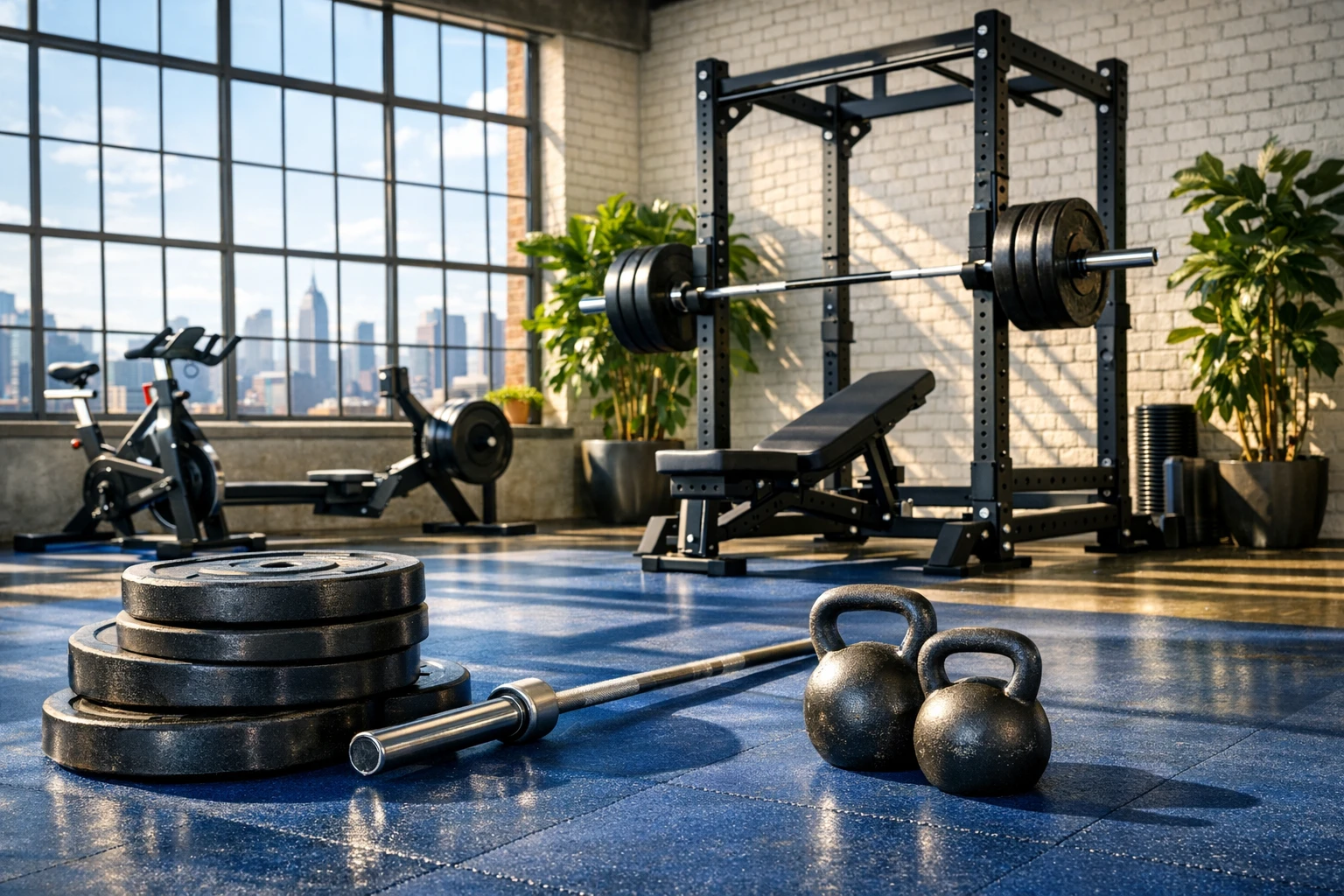
Free weights are usually the strongest starting point for second-hand buyers. Cast-iron plates, steel barbells, kettlebells, and sturdy squat stands can remain functional for many years if they have not been abused or stored in severe moisture. Cosmetic wear is common and rarely important. Scratches, chipped paint, and faded branding do not change the load on the bar. For many home gyms, this category offers the best balance of longevity and value. If your main goals are strength, muscle gain, or general conditioning, used free weights may outperform many new budget packages sold online.
Benches and racks sit in the middle. A quality bench can be a great buy, but padding breakdown, unstable legs, or sloppy adjustment ladders can compromise comfort and safety. Power racks and half racks are generally durable, yet you still need to confirm dimensions, hole spacing, weight capacity, and attachment compatibility. A rack that fits your room poorly or cannot accept the safeties and pull-up options you want may become a frustrating compromise, no matter how solid the steel looks.
Cardio equipment requires more discrimination. Treadmills deliver excellent training value but are often the riskiest used purchase because they combine motors, belts, decks, electronics, and a history of impact. Repair costs can erase initial savings quickly. Ellipticals can also be troublesome if bearings or linkages are worn. Exercise bikes, especially simple spin bikes or air bikes, often fare better because their mechanisms are more straightforward and parts are easier to inspect. Rowers can be excellent buys when the rail is smooth, the resistance system works correctly, and the frame has not been twisted by rough handling.
A useful way to compare categories is to ask three practical questions:
- How many moving parts does this equipment have?
- How expensive is a typical repair if something fails?
- Can I still use it safely if cosmetic wear is present?
Under that lens, the best-used buys often include plates, dumbbells, kettlebells, racks, simple benches, and well-kept bikes. The more cautious purchases include treadmills with high mileage, multifunction machines with many pulleys, and older cardio units with outdated consoles. Your training goals should guide the final choice. Someone training for road racing may accept treadmill risk because indoor running matters deeply. Someone building a general home gym may get more long-term value from a rack, bench, and adjustable dumbbells. The smartest purchase is not the cheapest machine in sight; it is the one that keeps serving your routine after the excitement of the deal has faded.
Pricing, Negotiation, and the Hidden Costs That Shape Real Value
One of the biggest mistakes buyers make is comparing only the listing price with the original retail price. That shortcut feels convenient, but it misses the full economics of used equipment. A treadmill listed at half of its former price may still be poor value if it needs a new belt, special transport, or a circuit board that is hard to source. By contrast, a slightly more expensive used rower from a reputable line may offer years of reliable service with minimal upkeep. Real value lives in the gap between what you pay today and what the equipment will cost you to own over time.
As a broad rule, used fitness equipment often sells for 30 to 60 percent below its original retail price, but the range shifts according to brand reputation, local demand, age, condition, and season. Heavy free weights can hold value surprisingly well, especially in areas where home gyms are popular. Entry-level cardio machines tend to depreciate faster because buyers know they may be less durable. Commercial-grade equipment can be an exception: even after years of use, it may remain desirable because its frame and components were built for higher workloads.
Before making an offer, research the current new price, not just the original launch price. Many products are discounted frequently, which changes the benchmark. Then add likely ownership costs such as:
- Transport or delivery fees for heavy or oversized items
- Replacement parts such as belts, cables, pads, or batteries
- Floor protection, mats, or platform materials
- Basic maintenance supplies like lubricant or cleaning products
- Time and effort needed for disassembly, pickup, and reassembly
Negotiation works best when it is specific and respectful. Instead of offering a random low number, explain your reasoning. You might point out that the bench upholstery has split, the bike computer no longer functions, or the rack must be partially dismantled before loading. Sellers respond better to calm logic than to dramatic bargaining tactics. If the equipment is clearly priced fairly and in strong condition, paying the asking price can still be the wisest move. Losing a reliable item over a small difference sometimes costs more than it saves.
Also consider resale potential. Simple, durable equipment is easier to sell later if your needs change. Complex machines with aging electronics are harder to move, even when they still work. That makes sturdy basics more attractive for buyers who want flexibility. A practical rule is this: if two used products cost roughly the same, the one with fewer failure points usually offers the stronger long-term deal. In the second-hand market, plain and dependable often beats feature-rich and uncertain.
Where to Buy, How to Move It, and a Practical Conclusion for Home-Gym Buyers
Where you buy second-hand fitness equipment influences both the price and the level of risk. Private marketplaces often have the lowest prices and the widest variety, from barely used adjustable dumbbells to commercial treadmills being cleared out of garages. The trade-off is limited recourse if something goes wrong after pickup. Refurbishers and specialist resellers usually charge more, but they may inspect, clean, repair, and sometimes provide short warranties. Gym closures, school auctions, and corporate surplus sales can also be worth watching, especially for durable cardio units and strength stations that were designed for heavy traffic.
Each source has advantages and limitations:
- Private sellers: lower prices, more room to negotiate, higher need for careful inspection
- Refurbished dealers: better quality control, possible support, smaller discounts
- Local gyms and studios: access to commercial gear, but equipment may have high mileage
- Auctions and liquidation sales: strong prices at times, though testing opportunities may be limited
Transport deserves as much attention as the purchase itself. A spin bike may fit easily into a hatchback, while a treadmill can become a stairwell puzzle with a power cord attached. Measure doors, hallways, ceiling clearance, and the final footprint before you commit. Ask the seller whether the item can be disassembled safely and whether the original manual is available online. Bring straps, blankets, basic tools, and another person when the load is awkward. Many expensive mistakes happen after a perfectly sensible purchase, during the optimistic phase when someone says, “It should fit.”
Once the equipment reaches home, clean it thoroughly, tighten hardware, and retest every function before beginning regular workouts. Replace small worn parts early instead of waiting for them to fail under load. Keep manuals, note model numbers, and record any maintenance you perform. That habit helps if you later need support or decide to resell.
Final Thoughts for Budget-Conscious Buyers
If you are building a home gym on a sensible budget, second-hand equipment can be one of the most practical decisions available. It rewards buyers who prioritize structure over shine, function over novelty, and fit over impulse. Beginners should focus on versatile basics that support simple, repeatable training. Intermediate users can stretch further into better benches, racks, and cardio tools once they know what they truly use. The goal is not to collect equipment like trophies in a garage museum. The goal is to own gear that gets used, stays safe, and keeps your training moving forward long after the thrill of the deal is gone.