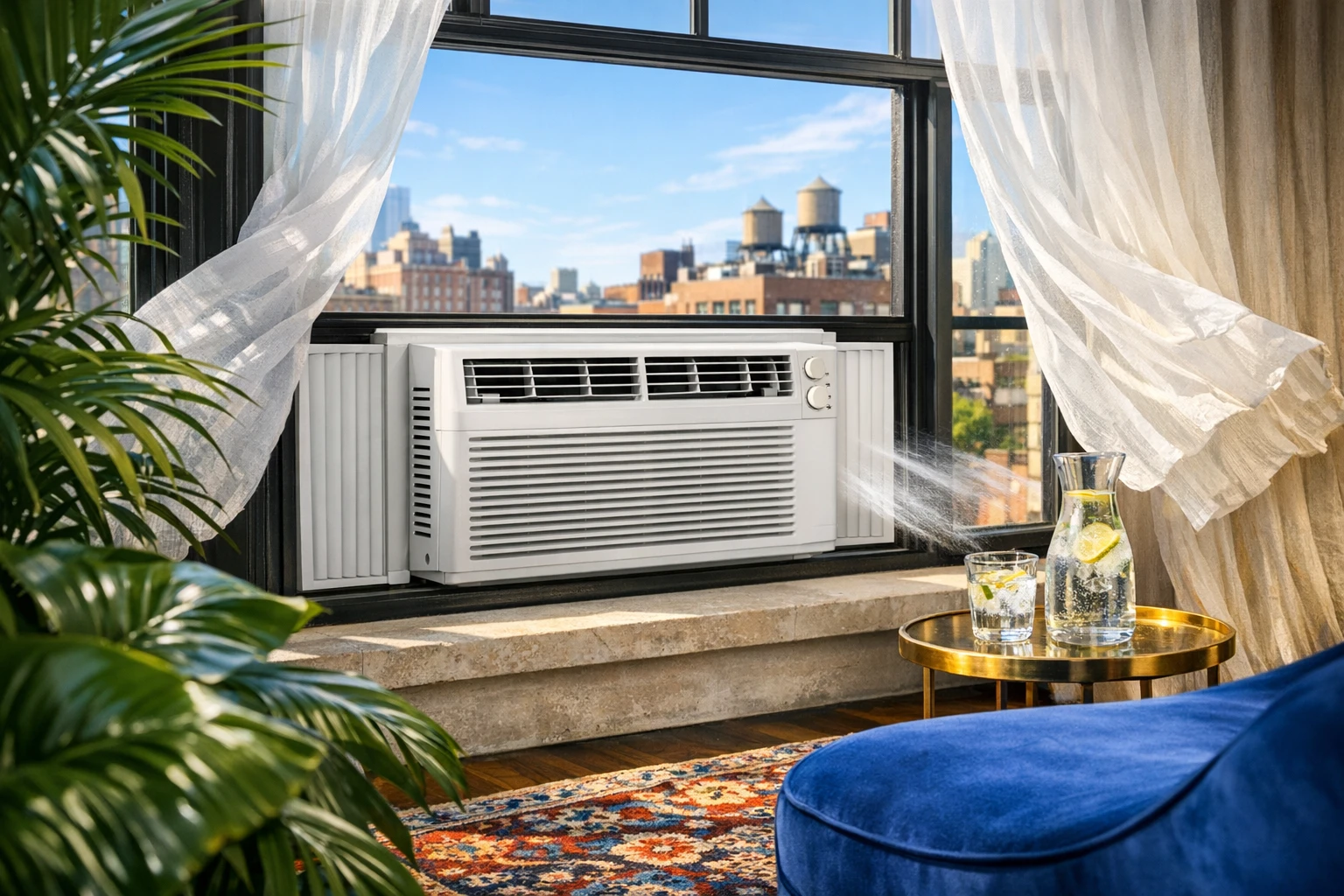
Buying a Second-Hand Air Conditioner: What to Check Before You Buy
Introduction
Buying a second-hand air conditioner can save money, reduce waste, and open the door to cooling options that might otherwise sit outside the budget. Still, the used market has a split personality: one listing hides a dependable seasonal helper, while the next disguises years of hard use behind a clean plastic shell. Because air conditioners mix mechanics, electronics, and refrigerant handling, a smart purchase starts with careful inspection rather than wishful thinking. This article breaks down the checks that matter most before cash changes hands.
Article Outline
To make the decision easier, this guide moves through a practical buying path, starting with whether a used air conditioner fits your situation and ending with a clear final screening process.
- When buying second-hand makes sense and when it does not
- The technical details that reveal value or risk
- How to inspect, test, and spot warning signs
- The hidden costs that can erase an apparent bargain
- A buyer-focused conclusion with a simple decision framework
When a Second-Hand Air Conditioner Is a Good Idea, and When It Is Not
A used air conditioner can be an intelligent purchase, but only in the right context. The strongest cases usually involve simple room-cooling needs rather than large, permanent installations. If you are shopping for a bedroom, home office, workshop, garage, studio, or rental unit, a second-hand window or portable AC can be practical. These units are relatively easy to move, simple to test, and less expensive to replace if something goes wrong. In contrast, used central air systems and many used mini-split systems demand more caution because installation quality, refrigerant condition, line-set compatibility, and electrical requirements have a much bigger impact on performance.
As a rough rule, room air conditioners often last around 8 to 15 years, depending on brand quality, maintenance, climate, and usage hours. Portable units sometimes sit on the lower end of that range because they work hard for their size and are frequently moved. Mini-splits and central systems can last longer, often 12 to 20 years, but their value depends heavily on professional installation and service history. That lifespan matters because a ten-year-old unit is not just older in calendar terms; it may also be less efficient than a newer model with similar cooling capacity. What looked like a bargain at the curb can become an expensive habit on the electricity bill.
There are also timing and market factors. Prices for used AC units often climb in late spring and summer, when heat arrives faster than planning. During cooler months, sellers may accept lower offers simply to clear storage space. A patient buyer can sometimes find better value in the off-season, especially for window units. Seasonality does not change the machine itself, but it changes your negotiating power.
Second-hand buying makes the most sense for people in these situations:
- Renters who need temporary cooling without investing in a premium system
- Homeowners cooling one difficult room rather than the whole property
- Landlords furnishing budget-conscious rental spaces
- Buyers who can inspect and test the unit before payment
- Anyone comparing a used unit against a very limited budget
It makes less sense when you need dependable, long-term whole-home cooling, ultra-low energy use, or full warranty protection. The more critical the cooling need, the more risky a mystery machine becomes. Think of the used market as a place for targeted value, not blind optimism. A second-hand air conditioner can be sensible, but only when the job, the price, and the condition line up.
Technical Checks That Matter: Capacity, Age, Efficiency, and Refrigerant
Before you focus on a shiny exterior or a low price, check whether the air conditioner actually fits the space and the technical requirements of your home. The first detail is cooling capacity, commonly listed in BTUs for room units. An undersized unit may run constantly without bringing the room down to a comfortable temperature, while an oversized one can cool too quickly and remove less humidity, leaving the room feeling cold and clammy rather than balanced. A few common size ranges are useful as a starting point, though insulation, sun exposure, ceiling height, and local climate all matter.
- About 5,000 to 6,000 BTU for roughly 150 to 250 square feet
- About 8,000 to 10,000 BTU for roughly 300 to 450 square feet
- About 12,000 to 14,000 BTU for roughly 450 to 700 square feet
The second key factor is age. Many manufacturers encode the production date into the serial number, and model information is often available through product databases or support pages. If the seller cannot identify the approximate age, that alone should make you cautious. A five-year-old machine with moderate use is one thing; a twelve-year-old unit with unknown maintenance is another. Components such as compressors, fan motors, capacitors, control boards, and seals all age, even if the outer shell looks respectable.
Efficiency ratings also deserve close attention. Window units may list EER or CEER, while split systems may use SEER or SEER2. A higher rating generally means lower operating cost for the same cooling output. When comparing used versus new, do not compare only the purchase price. Compare likely electricity consumption across several summers. In some cases, a very cheap old unit loses its financial advantage because it draws noticeably more power. That difference can matter if the AC will run daily.
Refrigerant type is another major checkpoint. In the United States, R-22 has been phased out of production and import for new supply since 2020, which makes systems using it more expensive and inconvenient to service. R-410A became the common replacement for many years, though newer refrigerants are gradually entering the market as regulations evolve. Refrigerants are not casually interchangeable; a system designed for one type cannot simply be topped off with another because the pressures, oils, and engineering differ. If a seller cannot tell you which refrigerant the unit uses, that is not a small missing detail. It is a sign that the listing may be poorly understood or poorly maintained.
In short, a sound second-hand AC needs the right size, reasonable age, acceptable efficiency, and serviceable refrigerant. Those four checks do not guarantee a perfect buy, but they eliminate a large share of bad ones before you waste time arranging pickup.
How to Inspect a Used Air Conditioner in Person
A second-hand air conditioner should be treated less like a decoration and more like a working machine that earns trust only through evidence. When you see the unit in person, start with a slow visual inspection. Check the body panels for heavy rust, cracks, missing screws, stains, or signs that the unit has been dropped. Light cosmetic wear is normal. Deep corrosion, bent frames, and improvised repairs are not. Look closely at the evaporator and condenser fins as well. A few bent fins are common, but widespread damage can reduce airflow and signal rough handling.
Next, inspect the parts owners often ignore. Open the filter compartment. A dirty filter alone is not a disaster, but it tells you something about routine care. If the filter is thick with dust, pet hair, grease, or mold-like buildup, the internal coils may be in similar condition. Smell the unit. A neutral or slightly dusty odor after storage is one thing; a sour, musty, or burnt smell points to moisture problems, microbial growth, or electrical trouble. None of those should be shrugged off simply because the price is low.
If possible, run the unit for at least 15 to 20 minutes. Listen first. The startup should sound purposeful, not violent. A brief compressor kick is normal. Loud grinding, repeated clicking, metallic rattling, or irregular surging suggest trouble. After several minutes, the discharge air should feel clearly cooler than the room. For many properly functioning room AC units, supply air can be roughly 15 to 20 degrees Fahrenheit cooler than the room air under normal conditions, though humidity and ambient temperature affect the result. You do not need laboratory precision, but you do need convincing performance.
During the test, pay attention to these warning signs:
- Compressor starts and stops too frequently
- Fan runs, but the air never becomes meaningfully cooler
- Water leaks where it should not
- Controls do not respond consistently
- Display shows error codes or blinking faults
- Excessive vibration shakes the casing or surface beneath it
Also check for completeness. Window units may be missing side curtains, brackets, remote controls, drain plugs, or mounting hardware. Portable models are often sold without the exhaust hose or window kit, which can turn a bargain into a scavenger hunt. Mini-split systems are a special case: the indoor and outdoor units must match, and missing accessories or damaged line connections can add meaningful cost.
One final practical detail is transport history. If a unit has been stored badly, hauled around on its side, or left exposed to rain for months, internal wear may not be obvious from the outside. Ask simple questions and watch how the seller answers. A careful owner usually remembers where the unit was used, why it is being sold, and whether it has ever needed repair. A vague story wrapped in urgency is worth less than a clear explanation backed by a working demonstration.
The Hidden Costs: Installation, Cleaning, Repairs, and Electricity
The ticket price of a used air conditioner is only the opening number. Real value depends on what it costs to make the unit usable, safe, and efficient in your space. This is where many second-hand deals stop looking clever and start looking unfinished. A $120 window AC may sound appealing, but if it needs a new bracket, foam insulation panels, a deep coil cleaning, and a long drive to collect it, the total can climb quickly. Add one minor repair and the savings narrow further.
Installation costs vary sharply by type. A window unit may need little more than secure mounting and proper sealing, while a portable AC might require a missing exhaust kit or adapter. Mini-splits are a different story. Even if the equipment price seems attractive, professional installation can cost several hundred to several thousand dollars depending on line-set length, wall drilling, electrical work, vacuuming, pressure testing, and region-specific labor rates. Buying a used mini-split without knowing the full installation path is a bit like buying a cheap piano without asking how many stairs stand between it and your living room.
Cleaning is another line item people underestimate. Dusty filters are easy. Dirty coils, blocked drains, moldy interiors, damaged insulation, and biological odors are harder. A neglected unit may require more than a wipe-down. If indoor air quality matters to you, a used AC with visible grime should be priced accordingly. Replacement parts matter too. Capacitors, remotes, fan blades, thermostats, and control boards are not always expensive on their own, but availability differs by model and age. Some older units become frustrating because the exact part you need is no longer easy to source.
Operating cost deserves equal weight. Older air conditioners are often less efficient, and electricity costs accumulate slowly enough to be ignored until the season ends. If a new unit costs more upfront but uses much less energy, the longer-term expense gap may shrink or even reverse. This is especially relevant in hot climates or homes where the AC runs daily for months.
A practical way to compare options is to estimate total ownership cost:
- Purchase price
- Transport or delivery expense
- Installation materials or labor
- Cleaning or maintenance
- Likely repair budget
- Seasonal electricity use
Many buyers use a rough rule of thumb: a recently manufactured, fully working room unit in clean condition may be worth somewhere around 30 to 50 percent of the current new price, depending on age, demand, and brand. Older units, incomplete units, or untested units usually deserve a much steeper discount. No rule replaces judgment, but the main point is simple: the cheapest listing is not always the cheapest outcome.
Conclusion for Budget Buyers: A Simple Framework Before You Say Yes
If you are the kind of buyer weighing cost against comfort, the smartest second-hand air conditioner purchase is rarely the flashiest listing. It is the one that answers the right questions clearly, fits the room properly, and still makes sense after you include setup and running costs. Where you buy matters. Local resale platforms, neighborhood groups, appliance outlets, estate sales, moving sales, and refurbishers can all offer good opportunities, but the safest deals usually come from sellers willing to demonstrate the unit in operation. Proof beats promises every time.
Before meeting a seller, ask for the model number, approximate age, cooling capacity, refrigerant type if known, and whether all accessories are included. Request photos of the front, rear, label plate, filter area, and any damage. Ask why the unit is being sold. These are simple questions, yet the answers reveal a lot. A seller who responds clearly and specifically is easier to trust than one who treats every detail like a mystery novel.
At the final decision stage, it helps to sort what you see into three groups.
- Green flags: recent model, clean filter area, normal sound, strong cooling, complete accessories, reasonable price, and honest history
- Yellow flags: cosmetic wear, missing remote, minor fin damage, no original box, or limited paperwork
- Red flags: unknown age, weak cooling, unusual noise, strong odor, visible rust, missing major parts, or pressure to buy without testing
For renters, students, workshop users, and homeowners needing spot cooling, a second-hand window or portable unit can be a very practical solution. For buyers seeking long-term, whole-home dependability, new equipment often provides better certainty, efficiency, and warranty protection. In other words, the right audience for used cooling equipment is the shopper who can inspect carefully, compare rationally, and walk away comfortably when the numbers do not add up.
The good news is that you do not need to be an HVAC technician to buy wisely. You only need a method: match the capacity to the room, verify age and refrigerant, inspect the hardware, test the performance, price the hidden costs, and refuse rushed decisions. A second-hand air conditioner should feel like a deliberate purchase, not a heat-wave panic move. If the unit passes those checks, it may be a very good buy. If it does not, the best money you spend is the money you keep in your pocket.